Our Location
No. 2177, Shunhe Road,
Zhucheng City, Shandong Province, China

No. 2177, Shunhe Road,
Zhucheng City, Shandong Province, China

Introduction
Central Asia’s poultry industry is growing rapidly, driven by rising consumer demand for high-quality protein products and an expanding food processing sector. Among the most sought-after poultry products in the region, chicken feet have gained significant popularity due to their culinary and export value.
To meet this demand, fully automatic chicken feet processing lines have become a preferred solution for poultry processors in countries such as Kazakhstan, Uzbekistan, Kyrgyzstan, and Tajikistan. These automated systems improve production efficiency, ensure food safety, and provide consistent product quality.
This article explores the reasons behind the popularity of fully automatic chicken feet processing lines in Central Asia, their technical advantages, operational benefits, project examples, and future industry trends.
Chicken feet are highly valued in Central Asian cuisines and export markets, particularly in Asia and the Middle East. However, traditional manual processing methods face several challenges:
These challenges have created strong demand for automated processing solutions that can deliver consistent quality and high throughput, while reducing labor costs and maintaining hygiene standards.
The adoption of fully automatic chicken feet processing lines in Central Asia is driven by several key factors:
Automated lines can process thousands of chicken feet per hour, depending on the model. This allows processors to meet both domestic and international market demand efficiently.
Fully automated systems ensure uniform peeling, cleaning, and trimming, producing chicken feet that meet export standards in size, appearance, and hygiene.
Automation significantly reduces the need for manual labor. Staff can focus on supervision, quality control, and packaging rather than repetitive processing tasks.
Modern chicken feet processing lines are made of stainless steel and designed for easy cleaning and sanitization. Automation reduces human contact, lowering the risk of contamination.
These lines can be adapted to different production scales, from small-to-medium processors to large export-oriented facilities. Modular designs also allow future expansion.
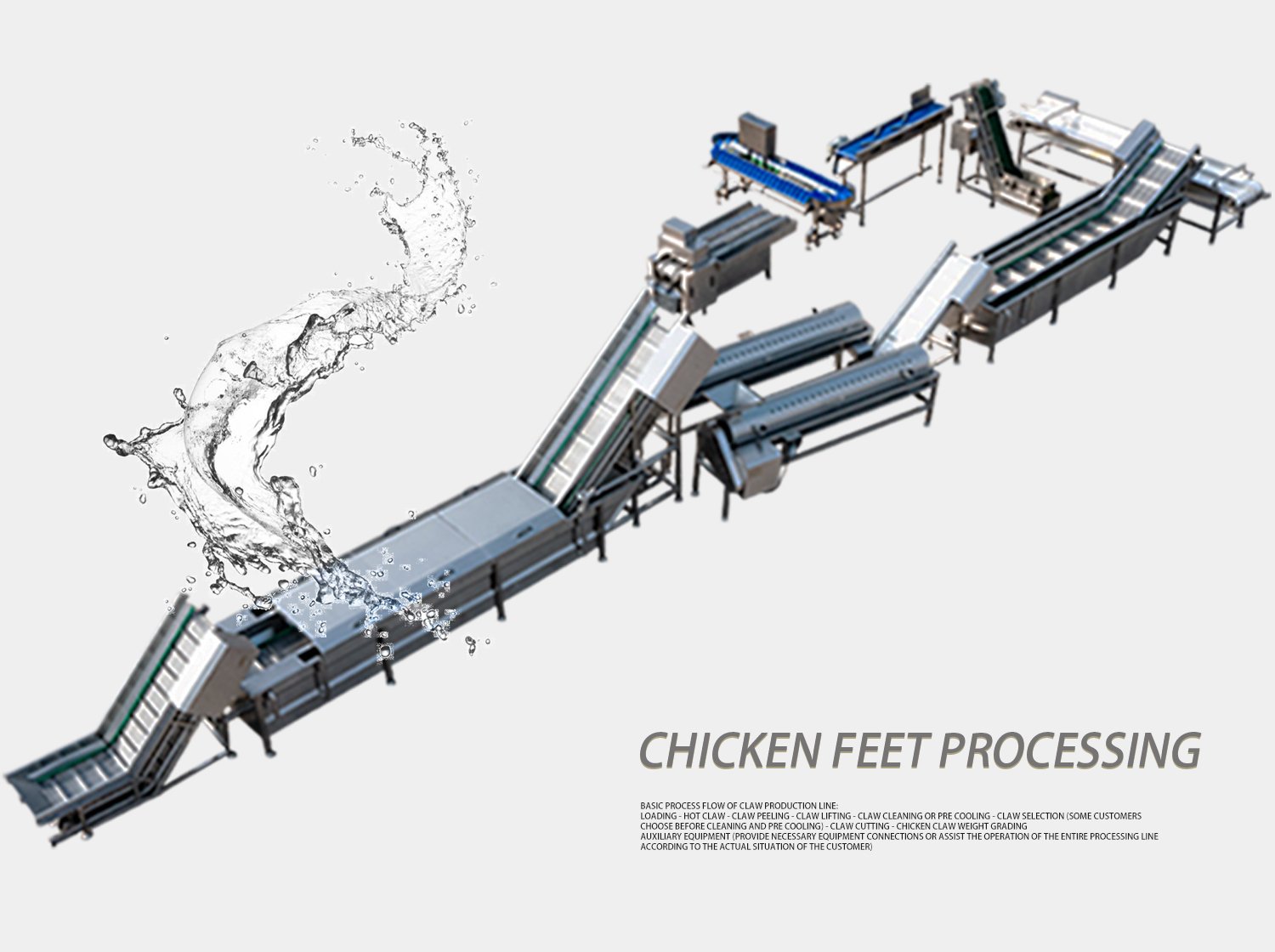
A modern fully automatic chicken feet processing line integrates several essential processing stages:
Fully automatic chicken feet processing lines provide tangible advantages for Central Asian processors:
Several Central Asian processors have successfully implemented fully automatic chicken feet processing lines:
Client feedback consistently emphasizes the line’s stable performance, ease of operation, and quick return on investment.
The popularity of fully automatic chicken feet processing lines is expected to grow due to:
Small and medium-sized processors that adopt automated chicken feet lines will be well-positioned to compete in regional and international markets.
The fully automatic chicken feet processing line has become highly popular in Central Asian countries because it addresses the unique challenges faced by poultry processors. By combining automation, hygiene, high efficiency, and scalability, these systems enable processors to:
As the poultry processing industry in Central Asia continues to modernize, fully automatic chicken feet processing lines will remain an essential investment for processors seeking efficiency, profitability, and market competitiveness.


