Our Location
No. 2177, Shunhe Road,
Zhucheng City, Shandong Province, China

No. 2177, Shunhe Road,
Zhucheng City, Shandong Province, China

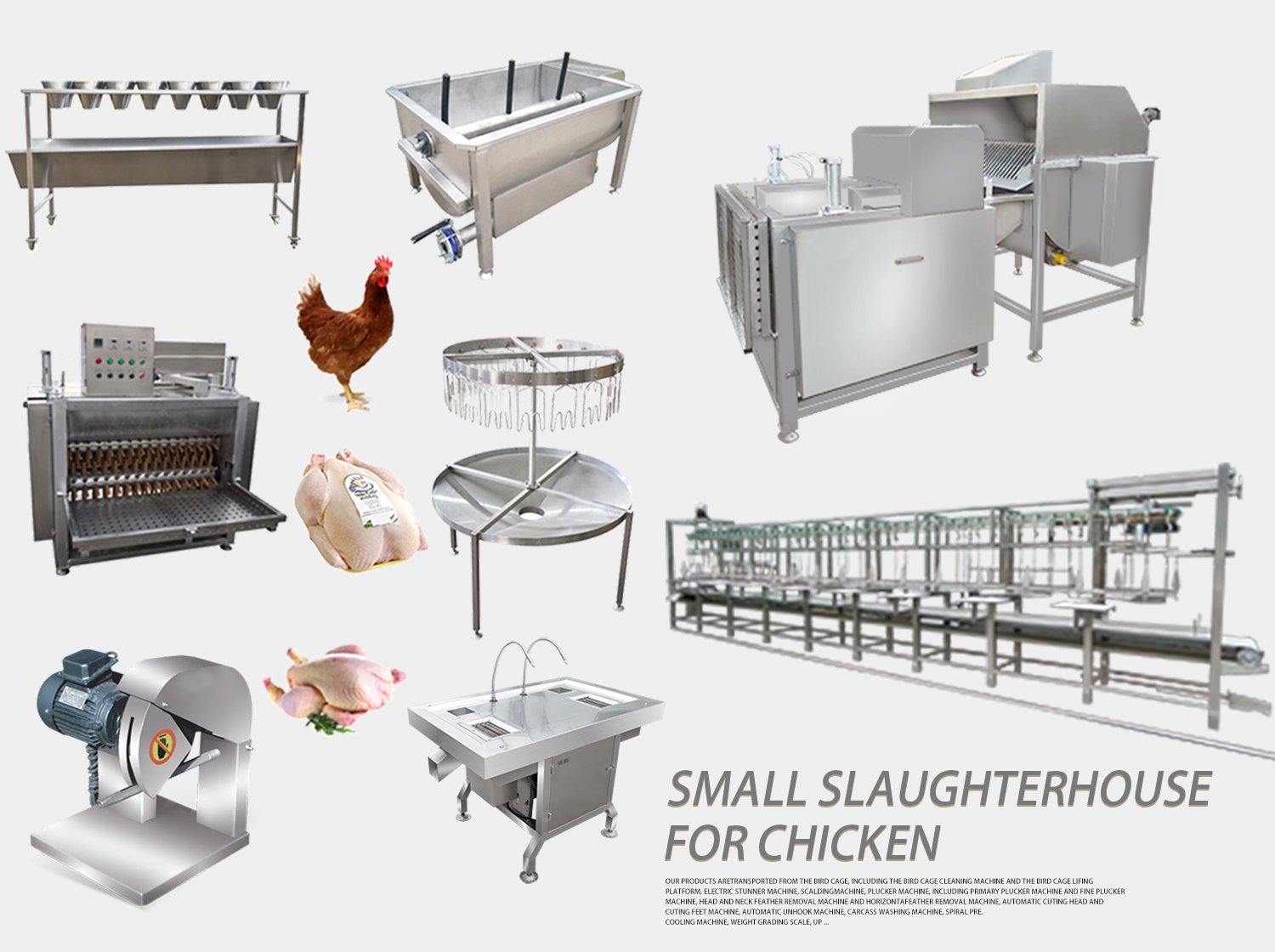
Introduction
Africa’s poultry industry is experiencing steady growth, driven by increasing demand for protein-rich foods, urbanization, and the expansion of small- and medium-scale poultry farms. While large-scale processing facilities are adopting fully automated slaughter lines, small producers require 50–300 BPH (birds per hour) small-capacity broiler chicken slaughter equipment that is affordable, easy to operate, and efficient.
These small-capacity systems are gaining popularity across African countries, including Nigeria, Ghana, Kenya, Tanzania, and Cameroon. They help local farmers and processors improve production efficiency, maintain food safety standards, and reduce labor costs.
In this article, we explore why small-capacity slaughter equipment is in high demand in Africa, its technical advantages, operational benefits, implementation examples, and future trends.
Small- and medium-sized poultry farms dominate Africa’s local market. Many farmers still rely on traditional manual slaughter methods, which face several challenges:
To overcome these challenges, African farmers and small processors are turning to compact, small-capacity slaughter equipment that combines automation, hygiene, and ease of operation.
The adoption of 50–300 BPH small-capacity broiler slaughter equipment has grown rapidly in Africa for several reasons:
Small-capacity systems require lower initial investment compared to fully automated large-scale lines, making them ideal for startups, small farms, and rural processors.
These machines are designed for simplicity. Operators can quickly learn to run and maintain the equipment, reducing training costs and minimizing downtime.
Compact layouts are suitable for small workshops or limited space facilities. This flexibility allows farmers to install the equipment without major renovations.
Even at small capacity, automated processes reduce human contact with birds, standardize slaughter steps, and maintain food safety.
With capacities ranging from 50 to 300 birds per hour, the equipment can meet varying production needs. It is ideal for both local market sales and small-scale export operations.
These small-capacity lines integrate essential processing stages to ensure smooth and efficient operations. Key features include:
Gentle live bird reception and hanging systems reduce stress and prevent damage to the birds, ensuring better meat quality.
The 50–300 BPH small-capacity slaughter equipment offers tangible advantages for African poultry processors:
Even small-scale lines increase daily processing capacity significantly compared to manual methods, allowing processors to meet growing market demand.
Lower labor requirements and optimized workflows reduce operational costs while maintaining product quality.
Automated handling, scalding, and evisceration reduce contamination risks and ensure compliance with local and international hygiene standards.
Small-capacity lines are adaptable, making it easy for processors to adjust output according to market needs, peak seasons, or special orders.
Precise processing and consistent portioning improve product appearance, meat integrity, and overall customer satisfaction.
Several African countries have successfully adopted 50–300 BPH small-capacity broiler slaughter equipment:
Client feedback consistently highlights easy operation, stable performance, and quick installation as key advantages.
As Africa’s poultry market continues to grow, small-capacity slaughter equipment offers:
The 50–300 BPH small-capacity broiler chicken slaughter equipment is highly popular across Africa because it addresses the unique needs of small- and medium-scale poultry processors. By combining compact design, automation, hygiene, and flexibility, these systems enable farmers to:
As the African poultry market continues to expand, small-capacity automated slaughter lines will play a critical role in modernizing operations, improving profitability, and supporting sustainable growth in the industry.


