Our Location
No. 2177, Shunhe Road,
Zhucheng City, Shandong Province, China

No. 2177, Shunhe Road,
Zhucheng City, Shandong Province, China

Introduction
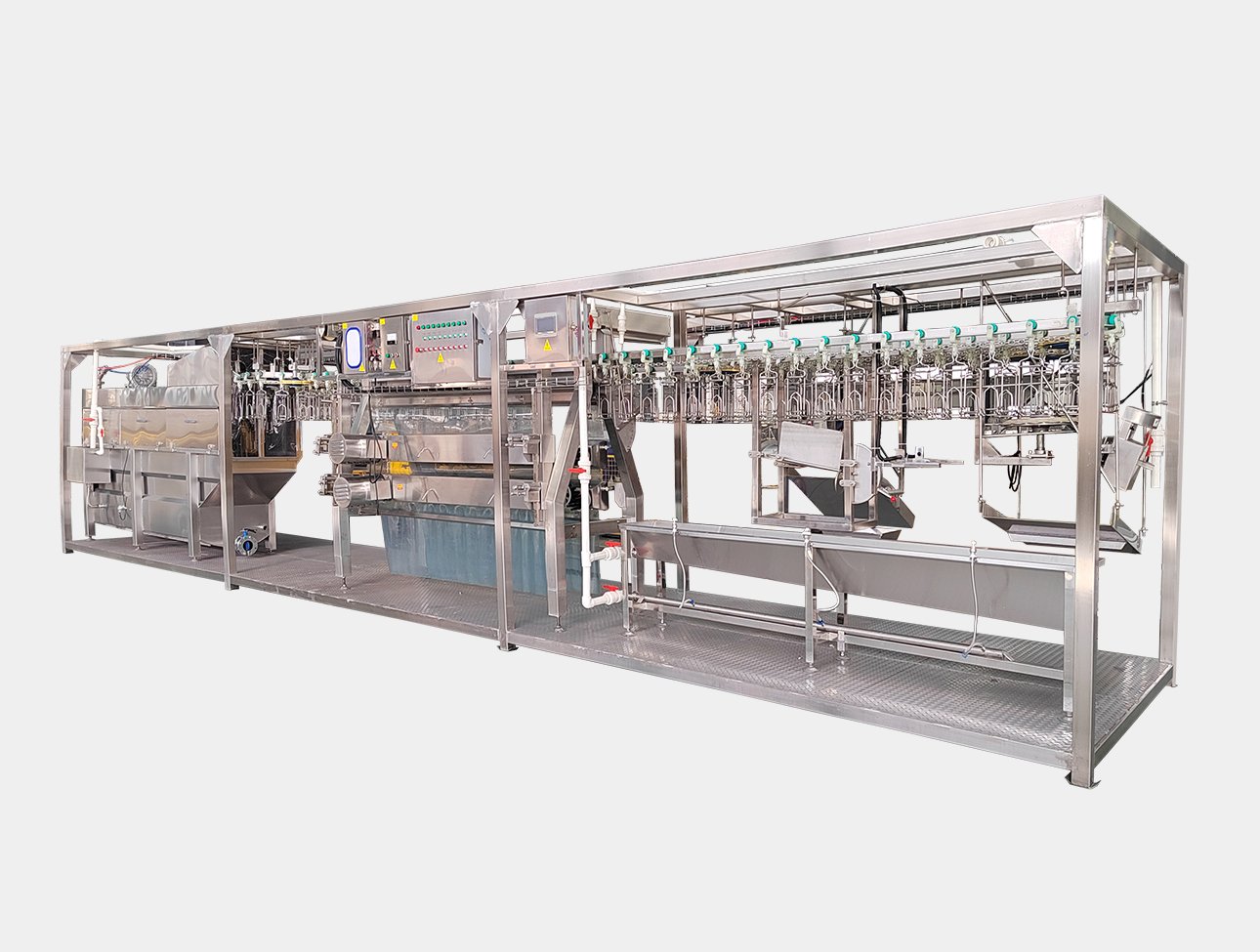
As the demand for high-quality poultry continues to rise across Africa, modern automated processing equipment has become essential for maintaining production efficiency and food safety. Recently, our company successfully shipped a 300–1000 BPH (birds per hour) plug-and-play broiler chicken slaughter line to Cameroon. This project showcases the advantages of modular, easy-to-install poultry processing technology, enabling local processors to rapidly upgrade operations with minimal downtime and training.
In this article, we explore the project background, equipment features, implementation process, operational benefits, and the broader impact on the poultry industry in Cameroon.
Cameroon’s poultry sector has experienced rapid growth due to:
Despite this growth, many small to medium poultry processing facilities still rely on manual slaughtering, which presents several challenges:
To address these challenges, Cameroonian processors sought a plug-and-play automated slaughter line capable of handling 300–1000 BPH, balancing capacity with operational flexibility.
The choice of a 300–1000 BPH plug-and-play system was based on several strategic considerations:
This modular line can handle varying production demands, making it ideal for processors ranging from small-scale farms to medium-sized processing plants. The adjustable capacity ensures that facilities can scale operations efficiently as market demand grows.
Unlike traditional slaughter lines, the plug-and-play design minimizes installation time. Components are pre-assembled, and the system can be operational within days, reducing downtime and enabling faster return on investment.
The modular design allows processors to expand the line as needed without major reconstruction, ensuring both cost-effectiveness and future scalability.
The plug-and-play slaughter line shipped to Cameroon integrates several automated processing stages:
The line begins with a gentle bird reception and automatic hanging system, reducing stress on birds and ensuring smooth operations.
Our engineering team conducted a site survey in Cameroon to evaluate factory layout, power supply, and water availability. The slaughter line was then customized for optimal workflow and capacity utilization.
All components were manufactured using high-quality stainless steel for durability and hygiene compliance. The line underwent rigorous testing to meet CE and international standards before shipment.
The plug-and-play system was shipped to Cameroon using coordinated logistics. Pre-assembled modules allowed for simplified transport and minimized installation challenges.
Due to the plug-and-play design, the line was operational shortly after arrival. Comprehensive training was provided to local staff, covering:
Our team also provides remote support to ensure long-term operational stability.
After deployment, the slaughter line achieved remarkable results:
The system enables processors to handle up to 1000 birds per hour with consistent quality, meeting both local market and export demand.
Automation minimizes human contact, standardizes processing steps, and maintains hygiene compliance, ensuring safer poultry products.
Labor previously required for manual processing has been redirected to quality control and logistics, optimizing workforce utilization.
Precision processing preserves meat integrity, maintains consistent portion sizes, and reduces waste, enhancing profitability.
The Cameroonian client expressed satisfaction:
“The plug-and-play slaughter line was easy to install and operate. It has significantly improved our production efficiency and product quality, and the training provided by the team made our transition smooth.”
This project also sets an example for other poultry processors in Cameroon and neighboring countries considering automated processing solutions.
The success of this 300–1000 BPH plug-and-play line opens up multiple opportunities:
The 300–1000 BPH plug-and-play broiler chicken slaughter line shipped to Cameroon demonstrates how modern, modular automation can transform poultry processing. By combining high efficiency, automation, and food safety, local processors can achieve higher output, consistent quality, and operational cost savings.
This project highlights the importance of adaptable, easy-to-install solutions for emerging markets and sets a benchmark for poultry modernization in Africa.


